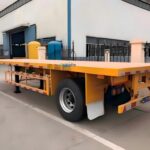
How Wide is a Flatbed Trailer? Standard Sizes & Custom Options
In the transportation industry, flatbed trailer width is a core factor that affects safety, compliance, and loading efficiency. Whether you haul building materials, heavy machinery, or oversized cargo, knowing standard flatbed trailer sizes helps you pick the right trailer, avoid violations, and keep operations efficient.
This guide breaks down common flatbed trailer widths to help you find the best fit for your business needs.
What is the Standard Width of a Flatbed Trailer?
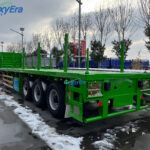
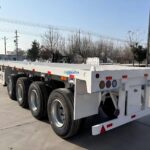
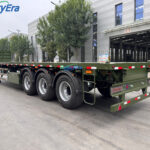
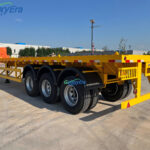
Most road-legal flatbed trailers in China use a standard width of 2.55 meters (100 inches). This size meets domestic transport regulations, so you can drive on highways and national roads without special oversize permits.
It also works with most loading docks, truck lanes, and container yards. You’ll find this size on 40ft/45ft standard flatbeds, skeletal trailers, and common sideboard flatbeds.
Some export or special flatbed trailers follow the international standard of 2.6 meters (102 inches), which fits EU and US transport rules. If you plan to use these in China, you’ll need to confirm local compliance first.
Flatbed Trailer Widths by Use Case
Flatbed trailers come in different widths to match different hauling needs.
1. Light-Duty Flatbed Trailers (Local & Agricultural Use)
These smaller trailers usually range from **1.8 to 2.2 meters wide**. They work well for short trips, farm use, or small-scale deliveries.
Pros: Narrow body, small turning radius, easy to drive on rural roads or tight factory paths.
Best for: Small equipment, farm goods, and loose building materials. Not suitable for oversize loads.
2. Standard Heavy-Duty Flatbed Trailers (Long-Haul Logistics)
This is the common “standard flatbed semi-trailer,” with a width of 2.55 meters. It’s widely used for 13m, 13.75m, and 17.5m long-haul trailers.
Loading efficiency: Fits two rows of 1.2m x 1.2m standard pallets, with no wasted space.
Compliance: Fully meets China’s “Limits of Dimensions, Axle Loads and Masses for Road Vehicles” — no special permits needed.
3. Oversized/Wide Flatbed Trailers (Heavy Haul)
Trailers wider than 2.55 meters count as oversize transport. Common widths include 3m, 3.2m, and 3.5m. You can also request custom widths for very large loads.
These are made for oversized cargo like construction machinery, wind turbine parts, or large steel structures, which often exceed standard widths.
Key notes: You must apply for oversize permits, plan approved routes, and use escort vehicles during transport. These trailers have strict limits on when and where they can drive.
—
Why Flatbed Trailer Width Matters for Your Business
1. Stay Compliant & Avoid Fines
China enforces strict rules on vehicle width. If your trailer exceeds 2.55 meters without a permit, you could face fines from thousands to tens of thousands of yuan. It may also impact your transport license.
2. Maximize Loading Efficiency
The 2.55m standard width fits most common cargo perfectly:
Palletized goods: Two rows of 1.2m pallets fit side-by-side, with full use of space.
Sheet goods: Matches standard 2.44m-wide materials, so cargo stays stable without overhang.
Too narrow, and cargo may hang over the sides, creating safety risks. Too wide, and you’ll waste space or need extra oversize permits.
3. Improve Safety & Traffic Flow
Oversized trailers have larger blind spots, which raise the risk of collisions when turning or overtaking. They also face restrictions in narrow lanes, tunnels, and toll stations, slowing down deliveries.
How to Choose the Right Flatbed Trailer Width
Pick the size that matches your typical cargo and routes.
Standard general cargo (pallets, building materials, common freight):** Choose the 2.55m standard flatbed trailer. It’s fully compliant, efficient, and cost-effective for all common routes.
Heavy/oversized equipment (construction machinery, large steel parts):** Order a custom wide flatbed (3m–3.5m) based on your largest cargo size. Always apply for oversize permits and plan your routes ahead.
Local/agricultural deliveries (small loads, short trips):** A narrow 1.8–2.2m flatbed trailer works best. It’s more maneuverable, cheaper, and fits tight roads easily.
FAQs
Q1: Can a 2.55m flatbed carry 2.6m-wide cargo?
No, not legally. Cargo overhang beyond the trailer width counts as oversize transport. You’ll need an oversize permit, plus clear warning signs on both sides of the load. Night transport also requires reflective markings. Without these, you risk fines.
Q2: Can I modify the width of my flatbed trailer?
No. Widening the trailer body yourself counts as illegal modification. It will fail inspections, void insurance claims, and lead to traffic penalties. For oversize needs, choose a factory-built, compliant wide flatbed trailer instead.
Q3: What width do export flatbed trailers use?
Rules vary by country. Most EU and US markets use the 2.6m (102-inch) standard. Southeast Asian and African countries often have looser rules, so you can customize widths to local limits. Always confirm the target country’s transport rules with your buyer first.