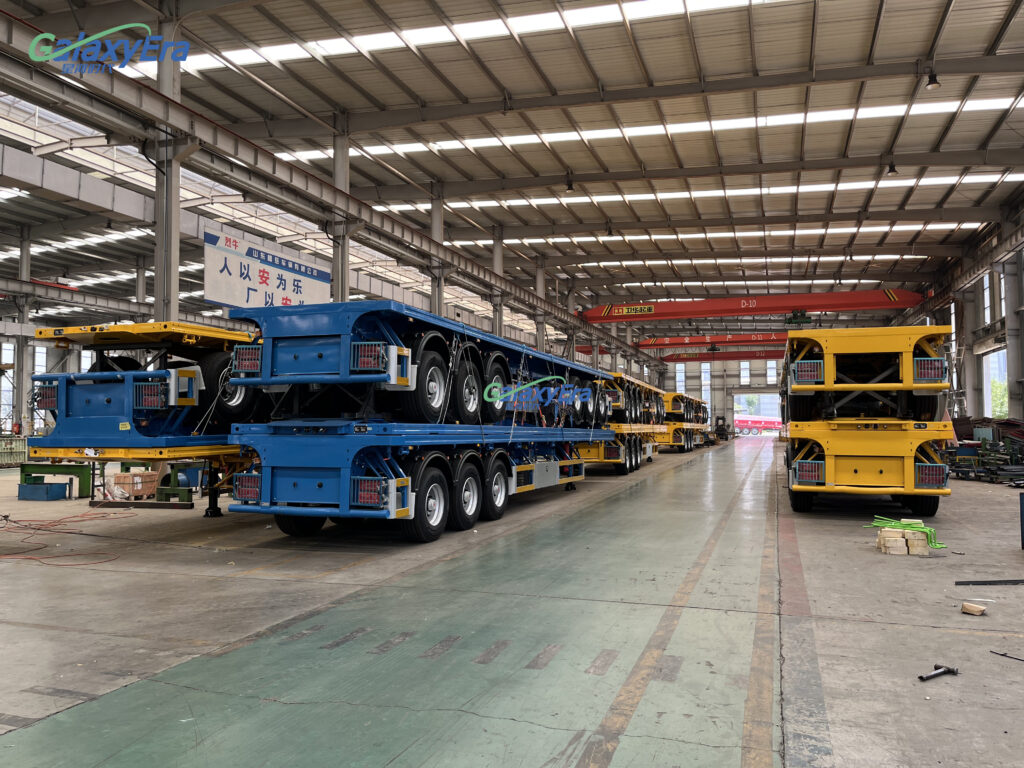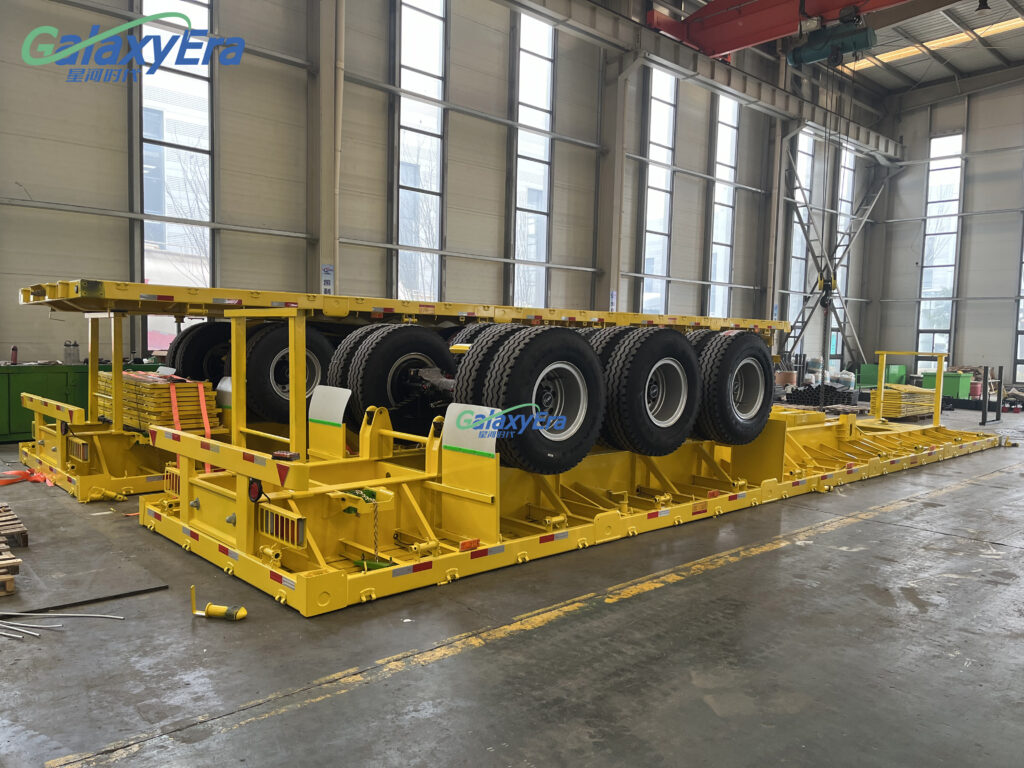
Flatbed trailers are one of the most common vehicle types in logistics transportation, capable of flexibly transporting various goods such as building materials, equipment, and containers. If you are planning to purchase or lease, the first question you need to figure out is: How long is a flatbed trailer? Different types of flatbed trailers for various purposes and with different axles have significant length differences. Let’s explain the mainstream sizes and selection tips in one go.
1. Mainstream lengths of flatbed trailers on the market The length of a flatbed trailer is not fixed; it is determined by the transportation scenario and regulations, forming several common standards:
- 20 ft (approximately 6 meters): Commonly used in small logistics and short-distance transportation, suitable for 20-foot containers or lightweight goods, with high flexibility.
- 40 ft (approximately 12 meters): One of the most common specifications, can accommodate 40-foot containers, and can also transport building materials, steel, etc., with strong compliance for high-speed transportation.
- 48 ft (approximately 14.6 meters): Often used in long-haul logistics, balancing loading capacity and traffic restrictions, and is a popular choice for many cross-border transportation.
- 53 ft (approximately 16 meters): The mainstream size for North American long-haul transportation, with a larger loading capacity, but additional compliance approval may be required in some areas.
- Custom short lengths (3-6 meters): 1-2 axles small flatbed trailers, mostly used for internal plant transportation, agricultural machinery transportation, or small-batch goods delivery.
2. How to choose the appropriate length of a flatbed trailer?
Choosing the trailer length should not just focus on “the longer, the better”; it needs to be determined based on your actual needs:
1. Look at the transported goods: If mainly transporting 20/40-foot containers, choose the corresponding standard model; if transporting extremely long steel or pipes, you need to choose a model with telescopic or extended design.
2. Look at the traffic scenario: For urban and internal plant transportation, prefer short or medium-length models to avoid inconvenient turning and backing; for long-haul high-speed transportation, the standard models of 40-48 feet are more suitable.
3. Look at regulatory restrictions: Domestic roads have clear requirements for the total length of trailers, trailers over 17.1 meters require special approval to be on the road. Before purchasing, be sure to confirm the local traffic regulations.
4. Look at loading efficiency: If transporting heavy goods for a long time, an overly long vehicle body will increase the vehicle’s own weight, reducing the effective load capacity; the balanced standard models of 40-48 feet offer better cost-effectiveness. 3. Choosing the right length can balance compliance and efficiency. Many people think that “the longer, the more it can carry”, but this is not the case: Insufficient length will result in goods being too wide or long, facing fines or safety hazards; exceeding the length limit will not allow normal road access, and will instead delay transportation. Choosing based on the size of the goods, transportation routes, and local regulations is the most reliable approach. If unsure about the specific dimensions, you can also communicate with the manufacturer to customize the flatbed length according to your transportation scenario, ensuring both loading requirements and compliance on the road.